
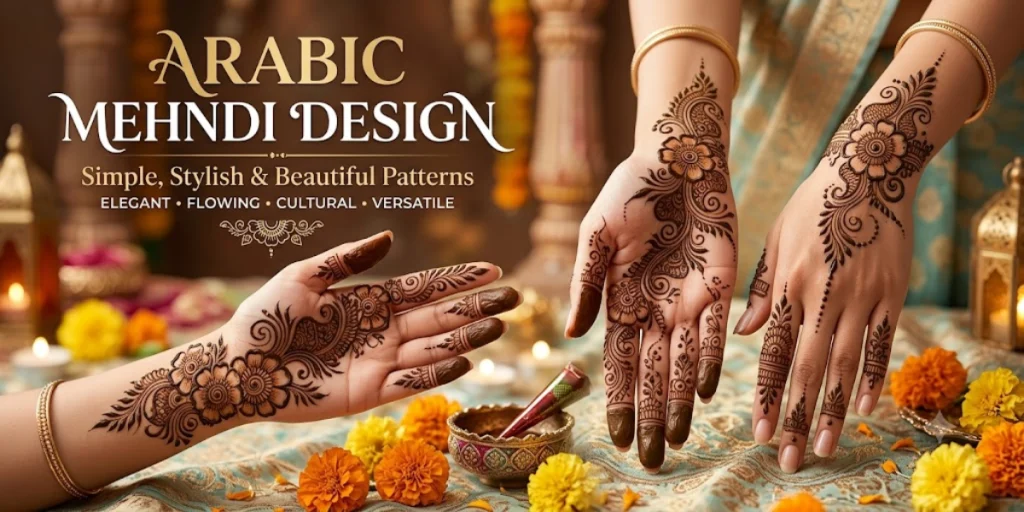
Arabic mehndi design is a popular choice for women and girls who love elegant and stylish henna patterns. These designs are known for their flowing lines, bold flowers, leafy patterns, and beautiful spaces between the motifs. Unlike some traditional mehndi styles that cover the entire hand, Arabic designs often leave parts of the skin uncovered, creating a neat and attractive look.
You can choose an Arabic design for weddings, festivals, family functions, parties, and other special occasions. There are many options, from simple patterns for beginners to detailed designs for brides. With the right design, you can decorate your hands and feet without making the pattern look too crowded.
What Is an Arabic Mehndi Design?
An Arabic mehndi design is a style of henna art that commonly uses bold floral motifs, curved vines, leaves, and flowing patterns. The designs often move diagonally across the hand instead of covering every part of the skin.
Arabic mehndi patterns are popular because they look graceful and are suitable for different occasions. You can apply them to the front or back of your hands, fingers, wrists, and feet. Many designs also combine traditional flowers with modern geometric shapes.
Popular Types of Arabic Mehndi Design
There are several types of Arabic mehndi designs to choose from. Each style has its own appearance and can suit different preferences.
1. Simple Arabic Mehndi Design
A simple mehndi design is ideal for beginners and anyone who prefers a clean look. It usually includes a few flowers, curved lines, small leaves, and a vine running from the wrist toward one or two fingers.
This style takes less time to apply and is suitable for casual gatherings, college functions, and small family celebrations.
2. Arabic Mehndi Design for the Back Hand
Back-hand mehndi designs are especially popular because their patterns are easy to display. A large flower in the center, surrounded by leaves and curved vines, can create an attractive design.
You can extend the pattern from the wrist to the index finger or little finger. Adding small dots and delicate lines around the main motif gives the design a balanced appearance.
3. Arabic Mehndi Design for the Front Hand
Front-hand mehndi designs often feature floral chains, leafy trails, and decorative finger patterns. You can create a diagonal design that begins near the wrist and continues toward the middle finger.
For a more traditional appearance, add a small floral motif in the palm. If you prefer a modern style, keep the palm mostly empty and decorate the fingers with fine lines and leaves.
4. Bridal Arabic Mehndi Design
Bridal mehndi designs are usually more detailed than everyday patterns. They may include large flowers, paisleys, leaves, curved vines, and decorative elements extending across both hands.
Some bridal designs combine Arabic patterns with Indian mehndi styles to create a fuller look. Brides can choose a design that covers the palms, wrists, and forearms while keeping the flowing Arabic pattern as the main feature.
5. Arabic Mehndi Design for Fingers
Finger mehndi designs are a good option for people who want a minimal look. These patterns may include tiny flowers, leaf chains, rings, dots, and curved lines.
You can decorate one finger or apply matching patterns to all fingers. Finger designs are suitable for parties, festivals, and occasions when you want a small amount of henna.
6. Arabic Mehndi Design for Feet
mehndi designs for feet often feature floral trails, leafy vines, and paisley patterns. A design can begin near the toes and continue toward the ankle.
You can choose a simple pattern for everyday celebrations or a more detailed design for weddings and festivals. Matching the foot design with your hand mehndi creates a coordinated look.
Arabic Mehndi Design for Different Occasions
The right design depends on the event and your personal style.
- Weddings: Choose detailed floral patterns or a combination of Arabic and traditional bridal mehndi.
- Eid: Select elegant floral vines, paisleys, and decorative finger patterns.
- Karwa Chauth: Try a medium or detailed design that complements your traditional outfit.
- Diwali: Choose a simple or medium-sized pattern with flowers and leaves.
- Parties: Minimal finger designs or a small back-hand pattern can look stylish.
- Casual occasions: Use a simple diagonal vine with a few flowers for a neat appearance.
How to Apply an Arabic Mehndi Design at Home
Applying Arabic mehndi at home becomes easier with practice. Follow these basic steps to create a neat pattern.
Step 1: Clean Your Skin
Wash your hands with soap and water, then dry them properly. Avoid applying lotion or oily products immediately before applying henna, as they may interfere with the application.
Step 2: Choose a Pattern
Select a simple Arabic mehndi design that matches your skill level. Beginners can start with a large flower, a curved vine, and a few leaves.
Step 3: Draw the Main Motif
Start with the largest flower or paisley shape. Then draw a flowing line from the main motif toward your wrist or fingers.
Step 4: Add Leaves and Details
Add small leaves, dots, and curved strokes along the vine. Keep enough open space between the motifs to maintain the characteristic Arabic style.
Step 5: Let the Henna Dry
Allow the henna to dry naturally according to the product instructions. Once the paste has dried and been removed as directed, the stain will gradually develop. The final colour can take around 24–48 hours to deepen.
Tips for Getting a Dark Arabic Mehndi Colour
A few simple practices can help you achieve a better henna stain.
- Use fresh, good-quality henna from a reputable source.
- Clean and dry your skin before application.
- Keep the design undisturbed while the paste dries.
- Follow the henna product’s instructions for removal and aftercare.
- Avoid washing the area immediately after removing the paste, following the product guidance.
- Never use black henna containing undeclared chemicals such as PPD, which can cause serious skin reactions.
Remember that the final colour depends on henna quality, skin type, body temperature, and aftercare. Avoid harsh chemicals or excessive heat to darken the stain.
Frequently Asked Questions
1. Which Arabic mehndi design is best for beginners?
A simple floral vine with a few leaves and dots is a good starting point because it does not require complex patterns.
2. How long does Arabic mehndi take to apply?
A simple design may take 10–20 minutes, while detailed designs can take an hour or longer.
3. Is Arabic mehndi suitable for weddings?
Yes. Arabic mehndi is suitable for weddings, and detailed bridal patterns can cover the hands and feet.
4. How long does Arabic mehndi last?
A henna stain usually lasts around one to two weeks, depending on skin type, placement, washing, and aftercare.
5. Can I apply Arabic mehndi on my feet?
Yes. Floral vines, paisleys, and leafy patterns look attractive on the feet and around the ankles.